
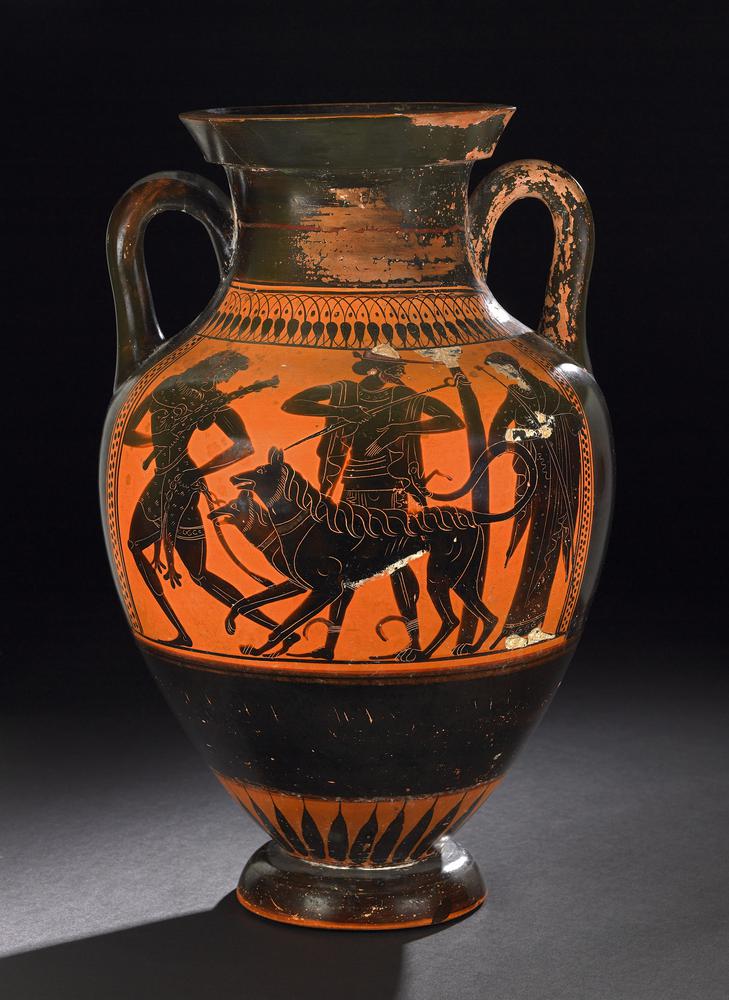
Αἰτοῦντος δὲ αὐτοῦ Πλούτωνα τὸν Κέρβερον, ἐπέταξεν ὁ Πλούτων ἄγειν χωρὶς ὧν εἶχεν ὅπλων κρατοῦντα. […] τῷ τε θώρακι συμπεφραγμένος καὶ τῇ λεοντῇ συσκεπασθείς, περιβαλὼν τῇ κεφαλῇ τὰς χεῖρας οὐκ ἀνῆκε κρατῶν καὶ ἄγχων τὸ θηρίον, ἕως ἔπεισε. […] Ἡρακλῆς δὲ Εὐρυσθεῖ δείξας τὸν Κέρβερον πάλιν ἐκόμισεν εἰς Ἅιδου.
Read the labor of
Heracles in Greek.
Divine names, familiar roots, and the movement of the sentence will reveal the struggle with Cerberus — even if you have never studied Ancient Greek.
- 1
- coherent excerpt
- 6
- discoveries
- 0
- tables memorized
authentic text
labor XII
Ancient Greek stops looking like ornament when you notice its familiar elements: names, familiar roots, and verbs of movement assemble the scene before a full translation does.
How Heracles defeats Cerberus
You moved from names to action and rebuilt the episode from the structure of the Greek itself.
Not a word-for-word gloss.
A route through meaning.
Names as coordinates
Πλούτων, Κέρβερος, Ἀχέρων, and Ἅιδης immediately establish the place and cast.
Roots as guides
ὅπλα, θώραξ, κεφαλή, and δράκων still live in modern words.
Verbs as the backbone of the plot
He catches, holds, chokes, shows, and returns: action carries the reading forward.
The original text as early as possible
You read a coherent passage from Apollodorus, not an artificial adaptation.
One episode creates the discovery.
A course turns it into a reading habit.
In AKRO courses, scenes like this lead toward independent reading of mythographers, historians, and poets — with a teacher, a clear path, and live feedback.
01Original texts from lesson one
02Alphabet and forms inside reading
03Myth as a coherent path
04Feedback from your teacher