 AKRO
AKRO
ἀρχαία ἑλληνική3 groups · 3 levels
Ancient Greek
From your first letters to the dialogues of Plato and Lucian. Direct method: we read, speak and understand Greek from the very first lesson.
Choose a group Open the free demoEarly Bird until 16 October: −€20 on every group · 1 day left
Choose a group →Autumn 2026 · live online groups · classes from 21 October
Latin and Ancient Greek in live online groups of 8–15 people. Six groups — from the alphabet to Lucian’s dialogues and Latin authors. Two classes a week, recordings and materials; the first month of the AKRO app subscription is free with VERITAS.
From your first letters to the dialogues of Plato and Lucian. Direct method: we read, speak and understand Greek from the very first lesson.
Choose a group Open the free demoFrom your first Latin words to comedies and Roman authors. Living Latin in class, with grammar explained where you need it.
Choose a group Open the free demoThree levels — find yours
Each language has three levels: beginner, continuing and advanced. On the language page you will find group descriptions, a short self-check, the timetable in your own time zone and registration.
We start with the alphabet. No prior knowledge needed.
You already read and know the basics of the grammar.
Basic course done — time for real authors.
How the course works
Direct method: the working language in class is Latin or Ancient Greek. You understand the text directly, without word-for-word translation.
Rules appear when you need them to understand, and are consolidated straight away in reading. No memorising tables for their own sake.
The words and forms from class are in the AKRO app: flashcards, exercises and texts, so everything settles before the next meeting.
Free first lesson
Read your first text in the original with a teacher, meet the method and ask your questions. Participants of the free lesson join the course at the Early Bird price.
Ancient Greek
We are arranging the date and host. Leave your email — you will get the announcement first and a reminder before we start.
Latin
We are arranging the date and host. Leave your email — you will get the announcement first and a reminder before we start.
AKRO
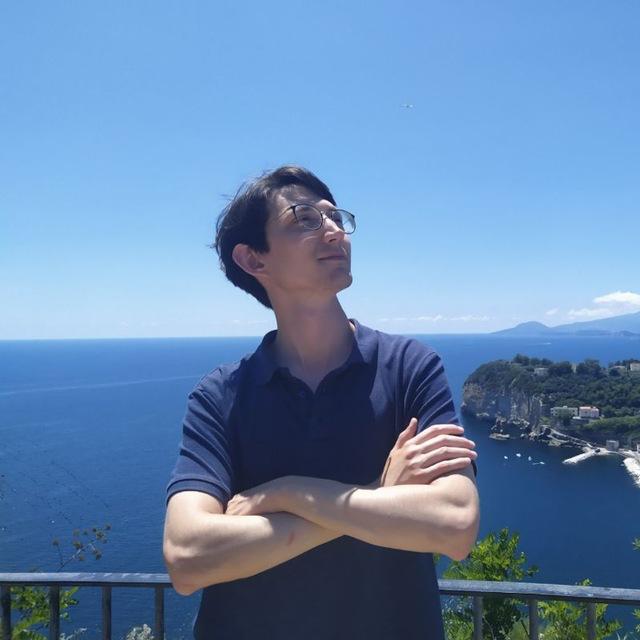
Andreas combines natural and grammar-translation methods to help students approach Latin and Ancient Greek with confidence.
In 2026, Andreas completed his Master's degree with honours in Classical Philology at Lomonosov Moscow State University. In 2022–2023, he twice took part in online courses at the Vivarium Novum Academy in groups devoted to reading Latin authors, before completing a one-year in-person internship at the Academy in Italy.
During his internship, Andreas participated in teaching-methodology workshops led by the Academy's instructors, organized Ancient Greek classes for beginners, and presented a seminar in Latin on the life and works of Ausonius. These experiences helped him master the inductive method of teaching classical languages both in theory and in practice.
Andreas combines techniques from natural and grammar-translation methods in both private and group teaching, drawing on the strongest practices of each. Since summer 2024, he has been a regular Latin and Ancient Greek instructor for beginner and advanced groups in the Palaestra project, where students consistently report satisfaction with their progress and leave positive feedback on his teaching.
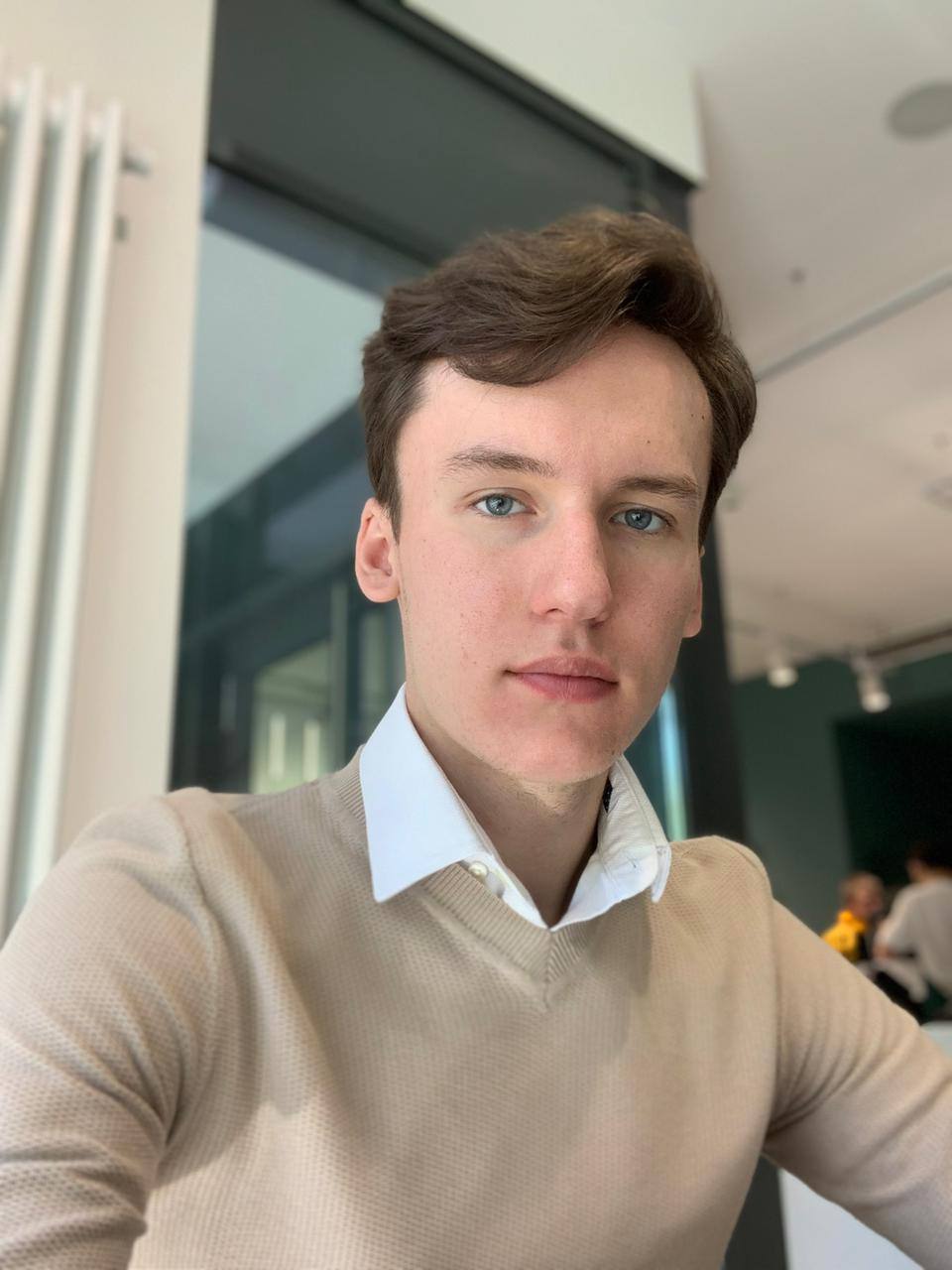
AKRO co-founder and Chief Academic Officer, Nicetas is responsible for the project's academic content and oversees the entire learning process.
Nicetas studied Ancient History at Lomonosov Moscow State University (2019-2022), completed an internship at Accademia Vivarium Novum (2022-2023), completed BA at RSUH's Institute for Oriental and Classical Studies – and since 2024 he has pursued his MA at the École Normale Supérieure (Paris) and RANEPA (Management in Culture, Education and Science).
Historical and comparative grammar of classical languages, syntax, Latin grammarians, archaic Latin, and Indo-European studies.
Languages: English (C1, 2015), French (C1, 2023), German (B2, 2022), Latvian (C1, 2017), Italian fluent, Russian native

Julita makes Latin grammar easier to understand through clear explanations, the history of the language, and connections with other languages. Explanations in class are given in English.
Julita is completing her MA in Classical Philology at Adam Mickiewicz University in Poznań, having previously studied Classical Studies at the University of Gdańsk. Her academic interests include the history of medicine and botany, Roman history, and the history of education.
Alongside her academic studies, Julita has developed her knowledge of Latin and other languages through independent study. She has two years of experience teaching foreign languages. Her approach draws on her passion for grammar and comparative linguistics: understanding how a language developed and how languages relate can make grammar more intuitive and meaningful.
Students describe her as a patient, warm, and logical teacher who explains difficult concepts clearly and step by step.
Languages: Polish (native), English (C1), Italian (B2+), German (B2), French (B1).
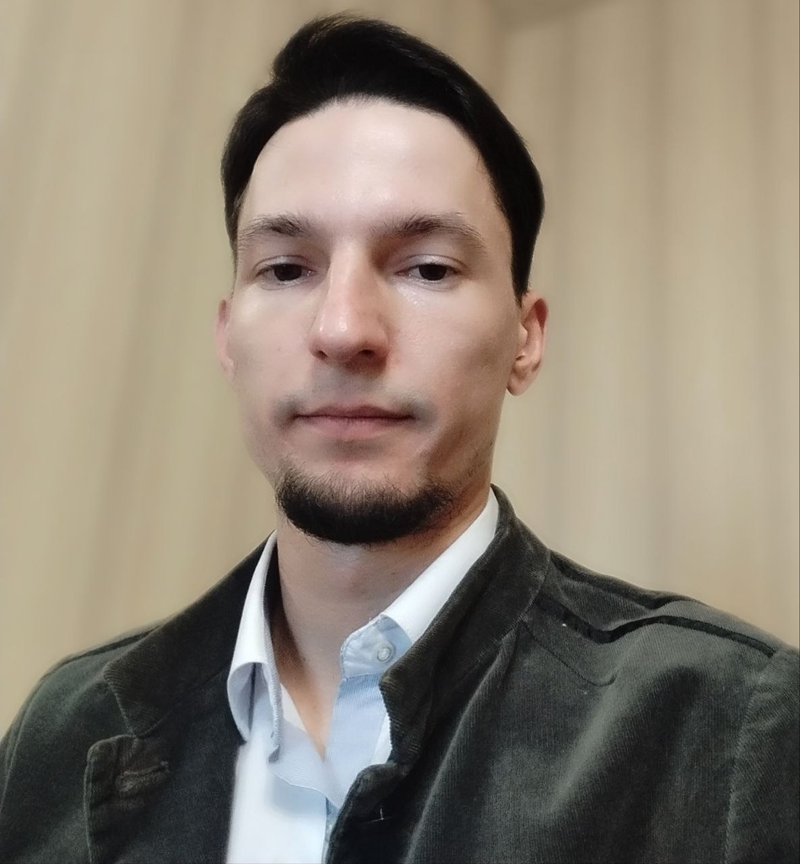
Daniil's multilingual expertise and substantial teaching experience help students make highly effective progress towards genuine command of both modern and ancient languages.
Daniil completed both his bachelor's and master's degrees at the Russian State University for the Humanities (RSUH) and is currently a postgraduate researcher in Classical Philology at RSUH's Institute for Oriental and Classical Studies. He successfully completed a one-year internship at the Accademia Vivarium Novum.
Alongside Latin and Ancient Greek, Daniil speaks English, Japanese, French, Spanish, Chinese, German, and Arabic, and also works in translation. In his private teaching, he has developed learning materials focused on the practical mastery of grammar.

Polina teaches Latin in a way that makes an ancient language feel clear, structured, and alive from the very first lessons.
Her approach combines a strong grammatical foundation with a deep understanding of how people learn: she holds a BA in Philosophy and an MA in Evidence-Based Education Development from HSE University.
She is a regular tutor at the Antibarbari HSE club and has completed six programmes at Vivarium Novum, one of the world's leading centres for active Latin and Greek: Latin and Greek courses, a Seneca reading seminar, and the in-person Otia Tusculana programme. She has also studied with Oxford Latinitas in a women-only reading seminar.
In her classes, students move step by step through grammar, begin reading original texts, and gradually gain confidence in working with Latin.
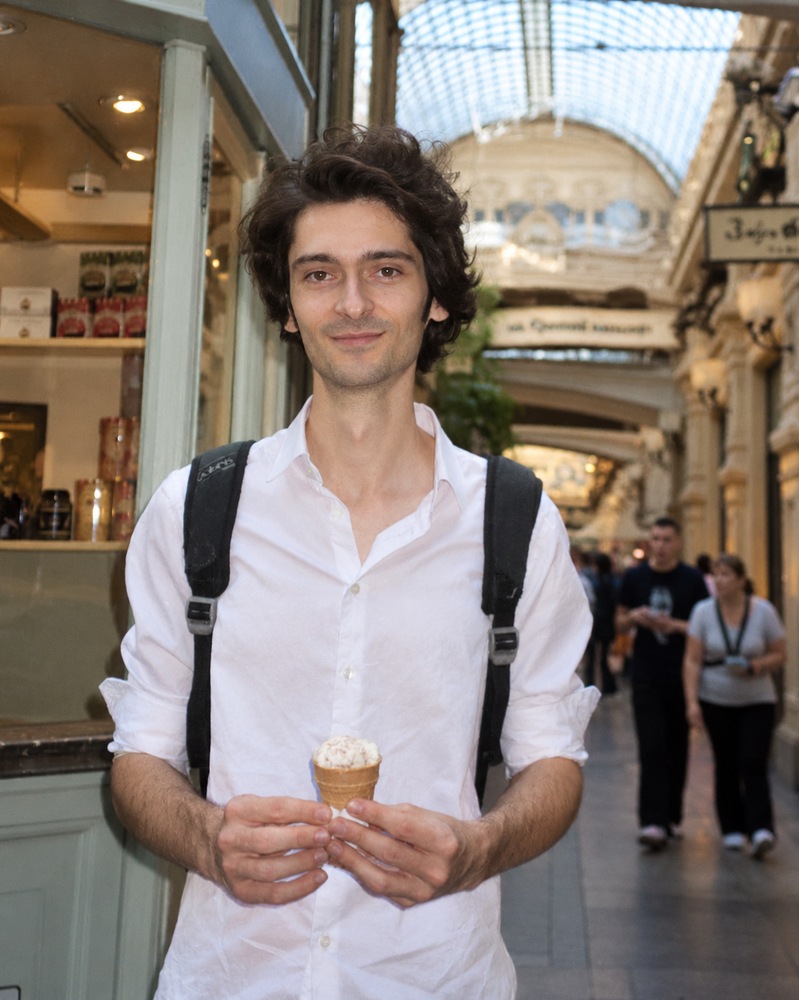
Symeon helps students build fluency in classical languages using an active, conversation-based approach.
His classes foster competence in grammar, idiom, and style through active use of the language and careful attention to form.
Symeon is a PhD candidate at the University of Cambridge writing on historical Hebrew grammar. He was a co-founder of Oxford Latinitas and co-directed Attic Piraeus, an immersive ancient Greek summer camp held in Athens. Symeon has over five years of experience teaching ancient languages with the direct method, including six terms of teaching for the University of Oxford and over 250 hours of online classes.
Student reviews & ratings
Average ratings from course participants’ responses, on a scale of 1 to 5.
Feedback from Ancient Greek course participants. Translated from Russian.
The atmosphere and how thoughtfully the course is put together — an amazing sense of the language being alive.
I really loved the vibe in class! It’s a calm, friendly atmosphere. We revisit previous lessons through questions and answers, you can peek at the grammar materials, and you’re still doing great :)) The lessons themselves are built around real conversation: we join the story of an Ancient Greek boy, Thrasymachus, and it’s as if we’re exploring this strange world alongside him... I especially want to thank Roman for the theatrical flair with which he helps us work out the meanings of new words! Once you figure one out, you won’t forget it))
What I enjoyed most was the complete immersion from the very first minutes — straight into the thick of it. No long, boring theory (though all the essential foundations are there, of course): we started reading in the very first lesson, answering questions in the second, and asking our own in the third. That intensive pace and constant practice — “read, read, read” — help you get into the right mindset straight away.
I also want to mention the people. Those who find their way to studying Ancient Greek are truly interesting. Talking with them is a pleasure, and everyone has something to teach you. A huge thank you to the organisers for the idea, the programme and the wonderful atmosphere!
No risk
If after the first lesson you feel it is not for you, we refund the full amount on request before the second upcoming group lesson after your first successful payment. If the group does not reach eight students, you get a refund or a transfer to another group — your choice.
Yes. Beginner groups start with the alphabet; no preparation is needed. Check the language of explanations: in the beginner Latin group explanations are in English, in the other groups in Russian or English.
Read the description and the sample text in the Levels section. If the sample makes sense without a dictionary, you are ready for that group. If in doubt, send the teacher a question through the form — we reply within a day.
Every lesson is recorded. Recordings and materials stay available in your group space for three months after the last lesson, so you will not miss anything.
The first payment secures your seat and the price of the whole course. The second is due 30 calendar days after your group starts. We send a personal link: no automatic charge and no extra cost.
Yes. Request a full refund before the second upcoming group lesson after your first successful payment — we refund what you paid and cancel any remaining payments. This guarantee is in addition to your statutory rights. Write to info@akro-greek.com.
A group needs at least eight students to start, and takes at most fifteen. If the group does not fill, you choose a full refund or another confirmed group. A transfer happens only with your consent.
Groups meet on European time (Madrid). The page also shows the times in your own time zone. Europe changes the clocks on 25 October — see the exact time of every lesson in the group calendar.
No. If you already have an account, use its email. After payment we send instructions; new students set a password through the link in the email.