
AKRO IN YOUR BROWSER
Read the opening lines of the Odyssey
Listen to the original, explore a word and open the translation. No sign-up.
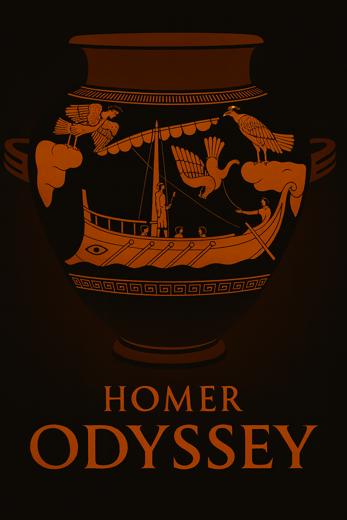
Homer · Odyssey
The opening of Book I
BOOK I · LINES 1–2
μοι ἔννεπε, Μοῦσα, πολύτροπον, ὃς μάλα πολλά
πλάγχθη, ἐπεὶ Τροίης ἱερὸν πτολίεθρον ἔπερσεν·
Explore Ἄνδρα — the poem’s first word.
AKRO commentary · lines 1–2
English translation
Tell me, oh Muse, of that ingenious hero who travelled far and wide after he had sacked the famous town of Troy.
Homer. The Odyssey. Rendered into English Prose for the Use of Those Who Cannot Read the Original. Translated by Samuel Butler. London: A. C. Fifield, 1900.
Could not load the recording
[1] Ἄνδρά μοι ἔννεπε, Μοῦσα
The initial ἄνδρα makes the human hero, rather than an abstraction such as the Iliad's wrath, the poem's announced subject. ἔννεπε is an archaic verb whose rarity gives the command a solemn colour: "tell" or "relate." μοι marks the singer as the immediate recipient of divine knowledge, while Μοῦσα is placed emphatically near the opening. The Muse is invoked again at verse 10, framing the proem, but she is not directly invoked elsewhere in the Odyssey.
The singular Muse need not be identified with one of the nine individually named Muses of later canonical tradition. In early epic, the Muses can still function as an undifferentiated divine plurality whose knowledge authorizes the song. Thus the proem establishes not merely a request for inspiration but a claim about the truth-status of the narrative.
[West, pp. 68-69]
[1] πολύτροπον
Ancient readers already disputed whether πολύτροπος meant "of many turns / many devices" or "much-wandering." The word occurs only once more in Homer, at 10.330, where either sense is possible. West prefers the intellectual sense, "ingenious" or "resourceful." It aligns the epithet with πολύμητις, πολύφρων, and πολυμήχανος, and with Odysseus' own later presentation of himself as a man known for every kind of δόλος.
The alternative, "much-wandering," would make the following ὃς μάλα πολλὰ πλάγχθη a gloss on the epithet. But that is less appropriate to the compressed manner of the proem and less characteristic of the hero: Odysseus does not travel from a love of wandering; he is repeatedly driven off course. The poem's first defining quality is therefore intelligence under changing conditions.
[West, p. 69]
[2] πλάγχθη ... Τροίης ἱερὸν πτολίεθρον ἔπερσεν
In πλάγχθη the syllabic augment is omitted, a normal freedom of epic diction. Such optional augmentation was once explained as an inherited Indo-European poetic feature, but the absence of regular augmentation in non-poetic Mycenaean records makes that historical explanation less secure.
ἱερός with a city need not mean "sacred" in a narrowly cultic sense. In Homer it can convey solemn impressiveness or august status. πτολίεθρον appears to be a poetic formation, without an attested Ionic equivalent πολίεθρον. The verb ἔπερσεν, "sacked," assigns Odysseus a decisive part in Troy's fall: he is its true conqueror because his intelligence devised the Wooden Horse.
[West, p. 70]
Edition used
Commentary based on Stephanie West's notes to Book I in Alfred Heubeck, Stephanie West, and J. B. Hainsworth, A Commentary on Homer's Odyssey, vol. I: Introduction and Books I-VIII (Oxford: Clarendon Press, 1988), pp. 67-74. The volume's lemmata follow T. W. Allen's second Oxford Classical Text (1917).
[West, pp. 67-74]
AKRO (c)