
Skip to content
AKRO by Stradarium

AKRO / Latin historical morphology

Latin under
investigation.

Cases have disappeared. Endings disagree. The third person has failed to appear.

Six unsolved cases have landed on our desk. Open the archive, compare the evidence and discover how Latin became the language we know.

2 000 ₽for one session

8 999 ₽for all 6 sessions

≈1 500 ₽ per session with the package · −25%

Starts 6 December · Sundays, 12:00–13:30 Moscow time / 10:00–11:30 CET

Taught by Nicetas
Format
6 sessionsThe history of forms, texts and discussion
Course starts
Sundays · 12:00–13:30 Moscow time / 10:00–11:30 CET
Your instructor
NicetasMeet your instructor

Grounds for investigation

“That’s the rule” leaves questions unanswered.

A textbook shows us the forms. We ask what happened before. Sound change, older grammatical categories and analogy have all left traces in Latin words.

Every oddity has a past. Sometimes there is more than one account of it.

Case register / 01—06

Six cases. One language.

From questioning familiar rules to reading an early Latin text. Each topic begins with a discrepancy worth explaining.

Case01

Identity check

Three genders. No article. Are you sure?

The textbook sounds certain. Ancient grammarians have something to add.

Inside the investigation

Parts of speech and their accidentia

Explore how ancient authors classified parts of speech and their attributes — accidentia. Why do their accounts of gender not always fit our familiar three? What did they mean by an article when describing Latin?

An ancient term and a modern category may not refer to the same thing. Check the paperwork.

Evidence / 01

genus · articulus

Case02

Exceeding authority

The ablative has taken on too much.

From where? With what? Where? When? One case has a suspicious number of duties.

Inside the investigation

The history of the case system

Trace how the Latin ablative came to combine functions of the earlier ablative, instrumental and locative. What disappeared, what merged and what survived in isolated traces?

The job description makes more sense once you know the department’s history.

Evidence / 02

ablativus

Case03

A questionable alibi

An active suspect. Passive-looking endings.

Sequor means “I follow”. Why does its form make me look like the recipient of the action?

Inside the investigation

Middle voice and deponent verbs

Investigate the connections between Latin forms in -r and the ancient middle voice. What survives in Latin, and can we treat the middle as an independent category?

Deponent verbs will testify. We will weigh the evidence before reaching a verdict.

Evidence / 03

sequor · sequitur

Case04

The French connection

The future has split in two.

Amabo and audiam promise the same tense. Why do their papers look so different?

Inside the investigation

Latin and Romance futures

Compare amo — amabo and audio — audiam. Explore the origins of the different future formations, then follow the Romance trail to infinitive-plus-“have” constructions and French j’aimerai.

The French future is not a direct continuation of amabo. This case follows a different trail.

Evidence / 04

amabo · audiam · j’aimerai

Case05

A missing-person enquiry

I, you… Where is he?

The first two persons are present. The third has several candidates and no simple answer.

Inside the investigation

The history of personal pronouns

Why does Latin have no separate third-person personal pronoun fully parallel to ego and tu? How do is, ille, ipse and reflexive se work? Did anyone actually go missing?

Lacking a dedicated form did not leave the Romans with nobody to talk about.

Evidence / 05

ego · tu · ?

Case06

First-hand testimony

The earliest witness.

This Latin does not yet look like textbook Latin. Its testimony is all the more interesting.

Inside the investigation

Reading an early Latin inscription together

Examine one of the earliest surviving examples of Latin writing. Work through the letters, word boundaries and forms together, using what we have learned in our five investigations.

Even the title “oldest text” needs evidence. We will discuss dating, interpretation and competing accounts.

Evidence / 06

litterae · verba · formae

Our method

A discrepancy. Then the evidence.

  1. 01

    Spot the discrepancy

    Start with a form or passage that resists the usual explanation.

  2. 02

    Test the theories

    Compare forms and sources. Learn to distinguish sound change from analogical remodelling.

  3. 03

    Reconstruct the history

    Explain how the form arose and what it preserves from an earlier stage of the language.

Grammar has the right to remain silent. But we can read inscriptions.

Who takes the case

For people who ask “why?”.

You have studied Latin and want to understand its forms. You read a Romance language and want to trace its ancestry. Or you enjoy language history and puzzles whose answers need evidence.

Familiarity with cases and conjugations will help. Ask us about the required level of Latin before enrolling.

Nicetas, instructor of the Latin historical morphology course
NICETASLatin & Ancient Greek

Your instructor

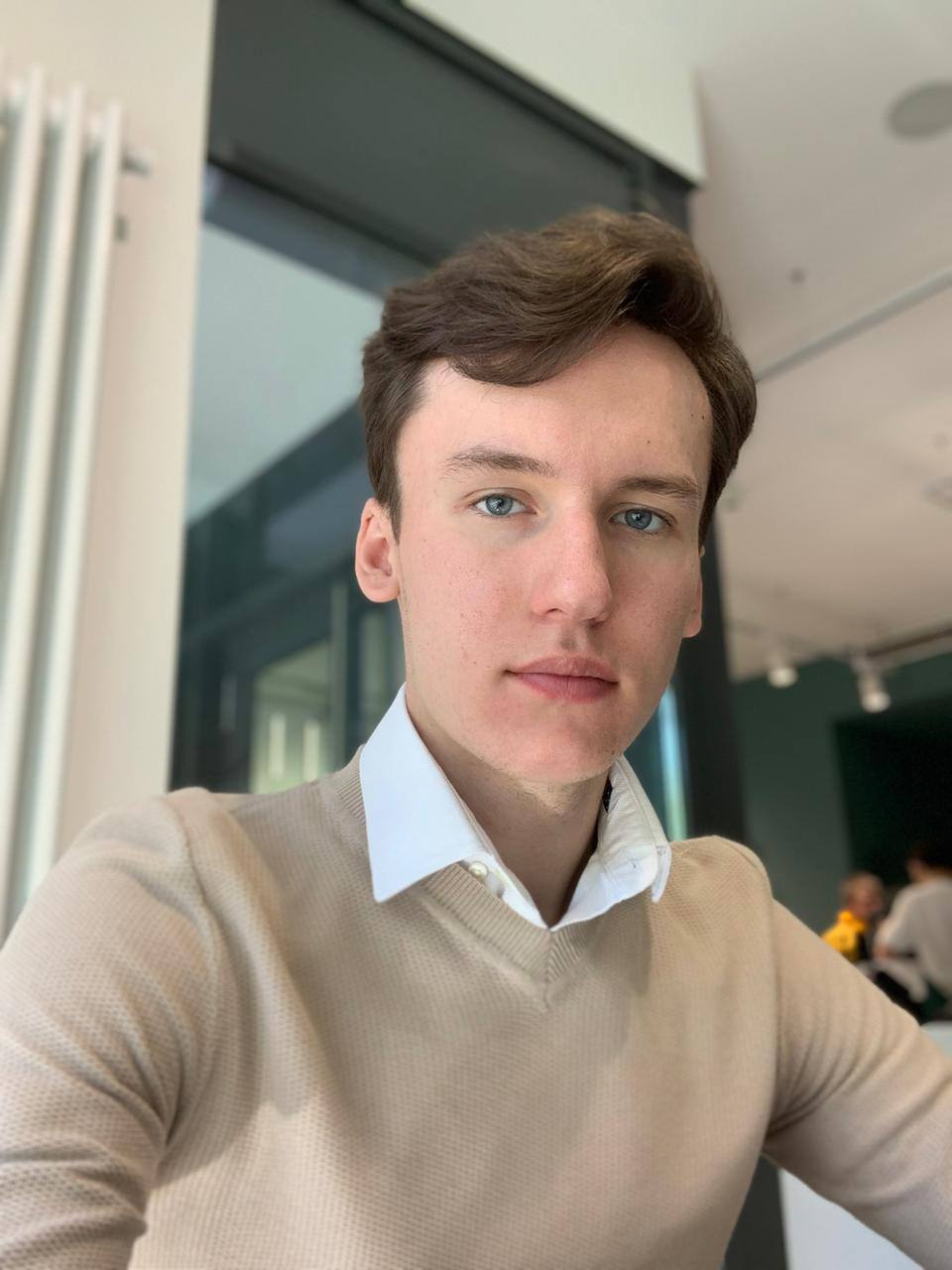
Nicetas

AKRO co-founder · Chief Academic Officer

A graduate of RSUH’s Institute for Oriental and Classical Studies, Nicetas studied Ancient History at Moscow State University and completed an internship at Accademia Vivarium Novum. He oversees AKRO’s academic content and teaching.

His interests include the historical and comparative grammar of classical languages, Latin grammarians, archaic Latin and Indo-European studies.

With Nicetas, we will trace the origins of familiar forms and test our explanations against ancient texts.

The case is open

One case or all six?

We start on 6 December. Sessions run on Sundays, 12:00–13:30 Moscow time / 10:00–11:30 CET. Choose one session or take the whole course with Nicetas.

Choose your topic

One session

2 000 ₽for one session

or €24.99

Any of the six topics, with an exploration of forms, original sources and discussion with Nicetas.

Enrol for one session

Save with the package−25%

The whole course

8 999 ₽for all 6 sessions

or €99

12 000 ₽6 × 2 000 ₽ bought separately

≈1 500 ₽ per session with the package

Save 3 001 ₽

All six investigations, every text and discussion. One payment for the whole course.

Enrol for the whole course