Introduction
- The script and pronunciation of your chosen language, sentence structure, first steps in natural text comprehension, and the opening chapters of the course textbook.
Live AKRO course
Ancient Greek and Latin as two paths into one guided reading environment.
Study Ancient Greek from beginner or advanced level, or Latin from the beginning, with live support, structured lessons, and a reader that keeps vocabulary, grammar, and review close to the text.
Two reading paths
AKRO brings Ancient Greek and Latin together in one educational environment: guided texts, vocabulary and grammar materials, regular practice, and support from the first textbook passage to the first original author.
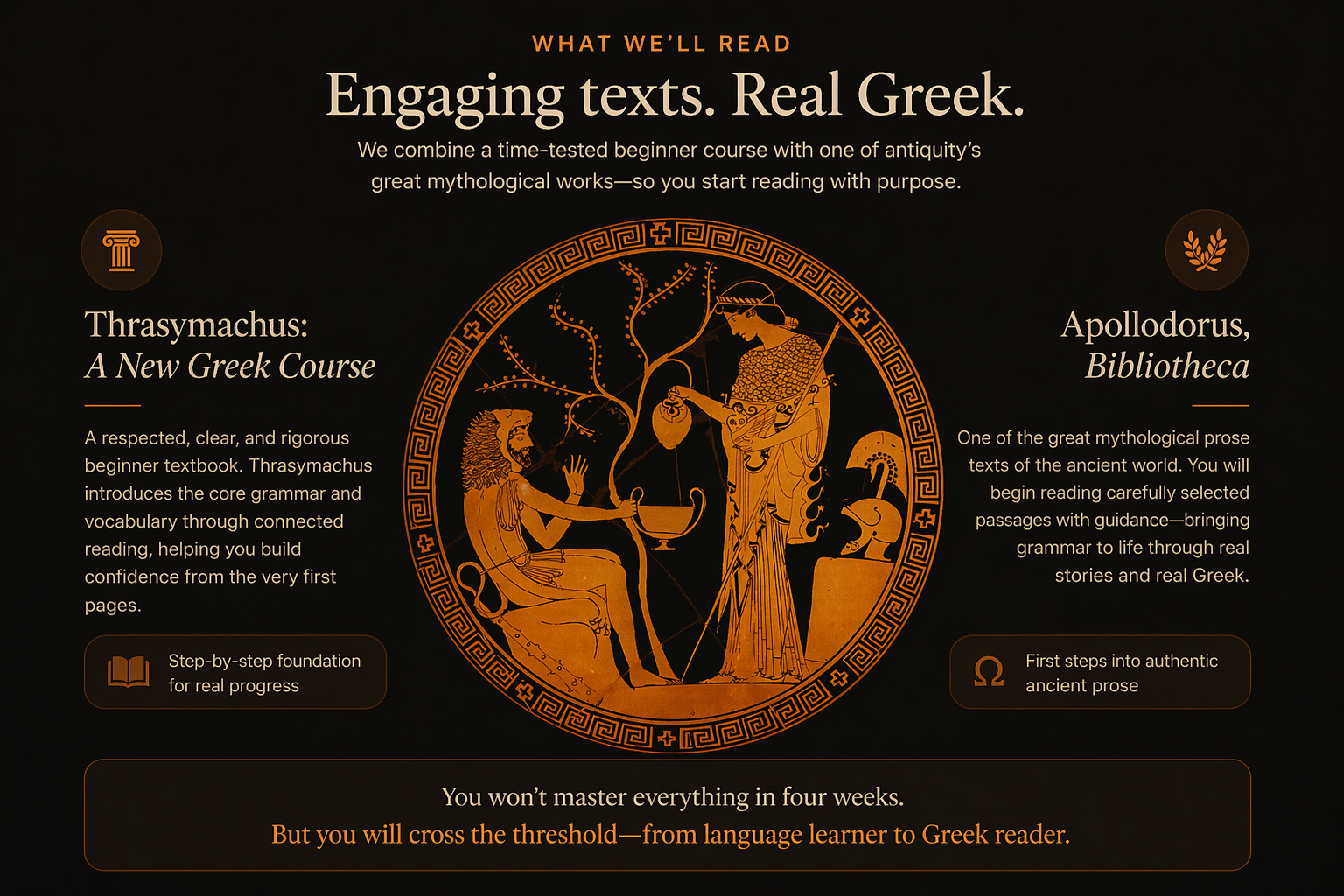
Follow the vivid and engaging story of a boy named Thrasymachus from the textbook Thrasymachus, together with selected passages by Apollodorus.
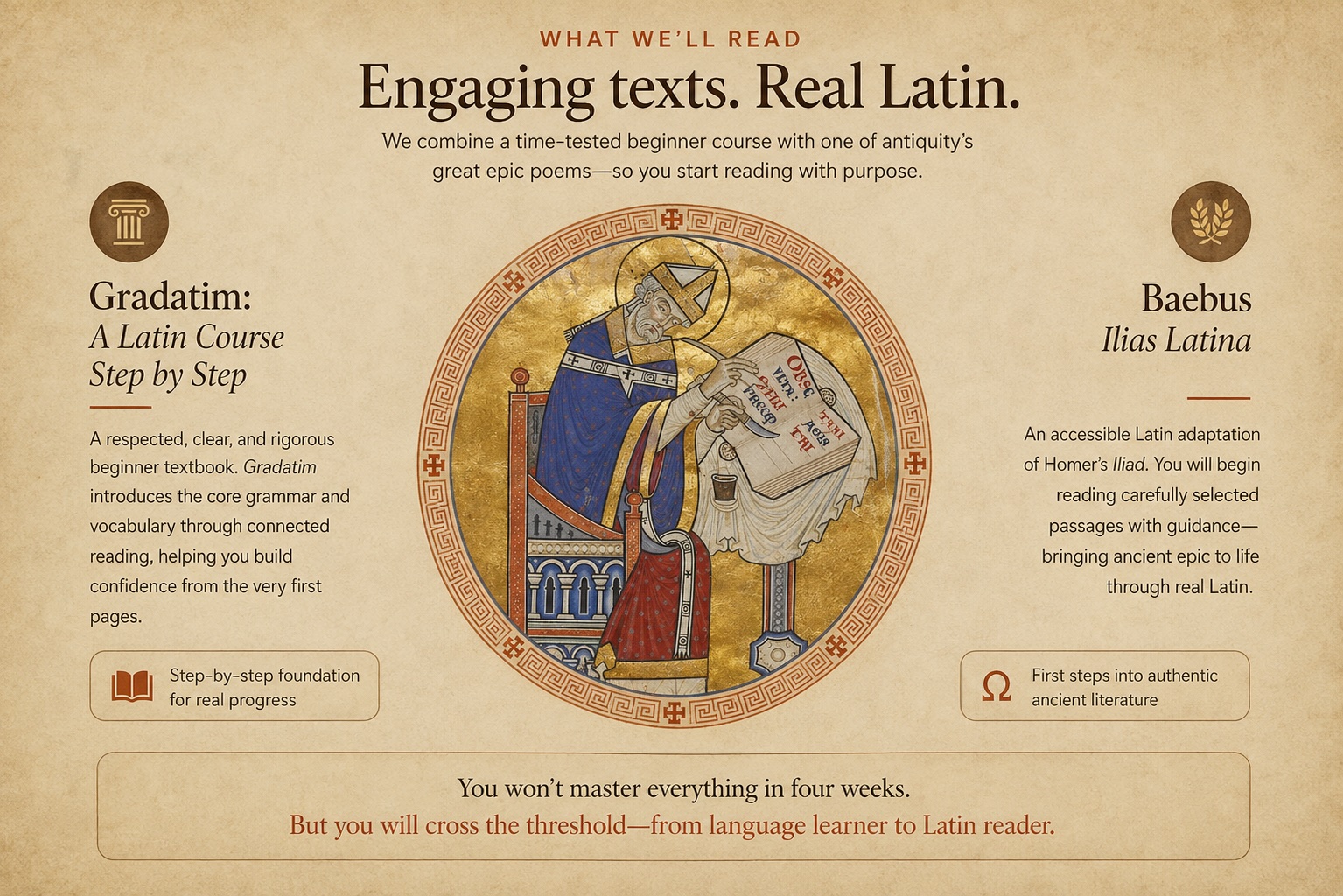
The Latin course is built around Gradatim, one of the newest natural-method Latin textbooks: its texts draw on ancient authors, while the gradual increase in difficulty immerses students in the Latin language and culture.
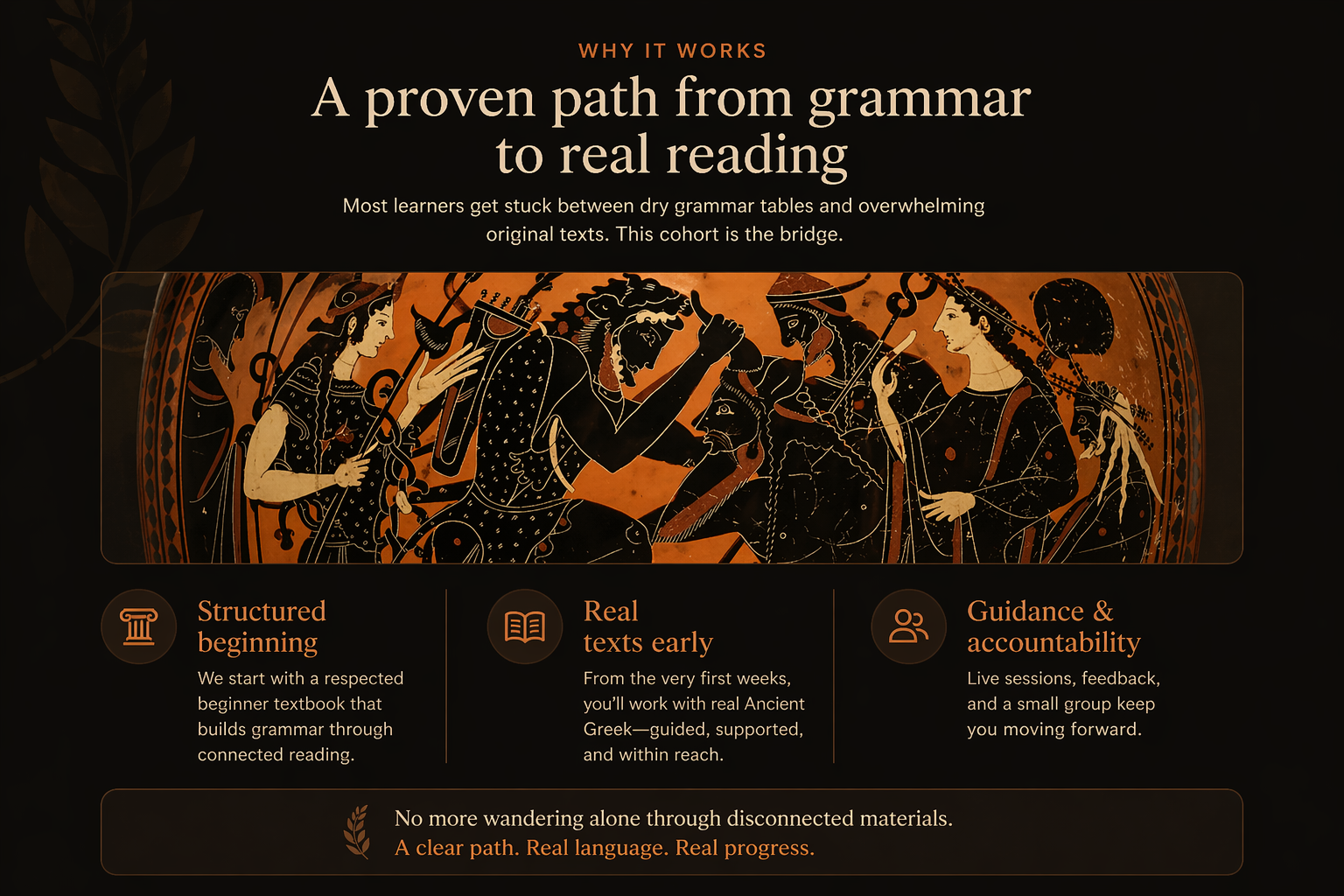
Why this works
Most beginners get stuck between grammar tables and original texts that are still too steep. This course gives you a bridge: explanation, a guided textbook path, and real reading practice.
Syllabus
Choose a language and preview the texts without leaving the page.
Structure
Fit
Probably not the best fit for advanced readers already comfortable with continuous Greek or Latin prose.
Akro support
Between meetings, Akro keeps the work in one place: readings, vocabulary, grammar support, listening, and progress.
About us
The courses are organized and guaranteed by classical scholars for whom ancient languages are a living path into texts, ideas, and intellectual history.
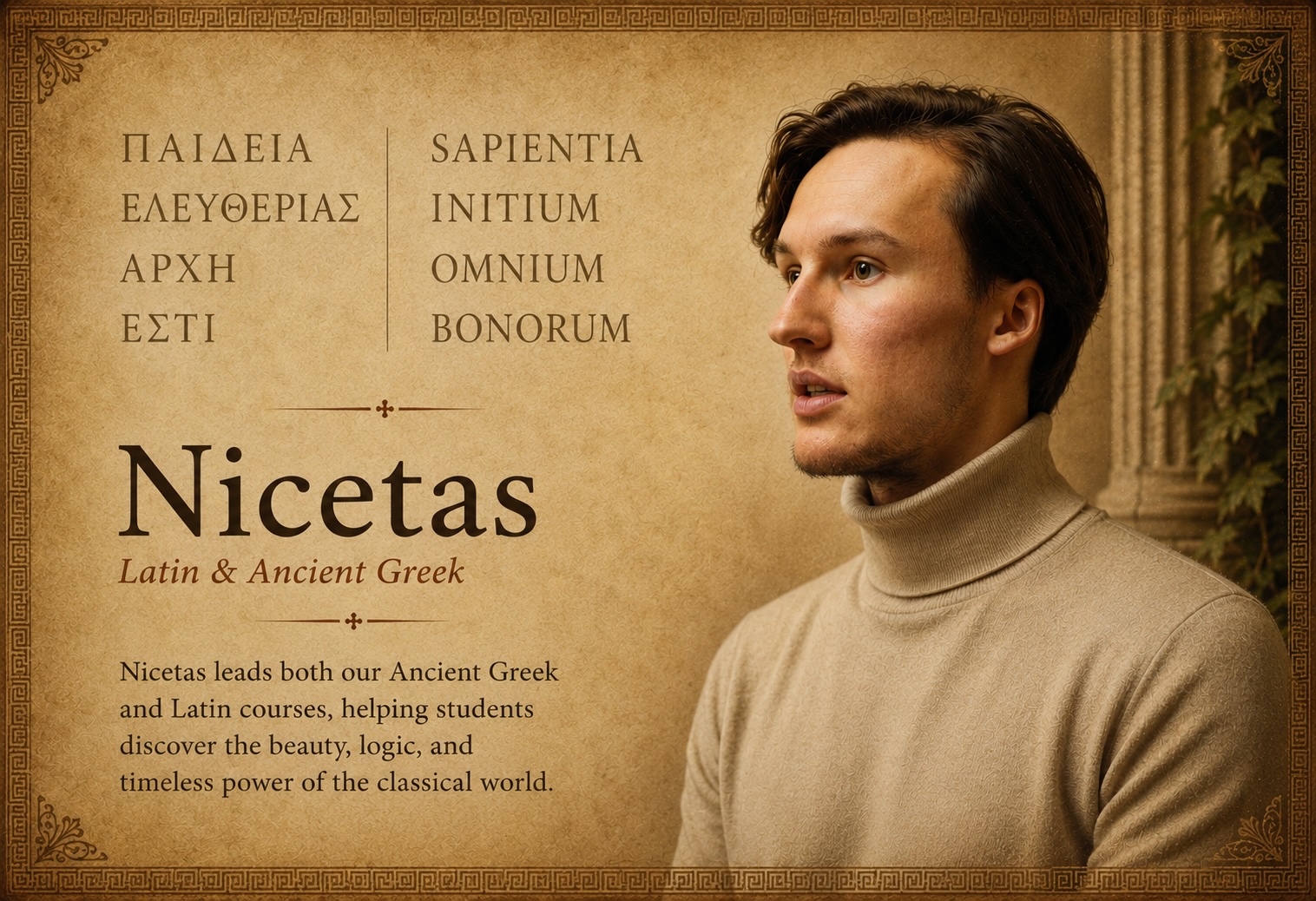
Passionate about languages and classical philology, Nicetas helps organize the Latin and Ancient Greek courses.
Nicetas studied Ancient History at Lomonosov Moscow State University from 2019 to 2022, in the Department of Ancient History, as a student of A. V. Belousov. He was one of the principal organizers of PALÆSTRA from its founding in 2022 on A. V. Belousov's initiative. In 2022-2023 he completed an internship at Accademia Vivarium Novum. In 2024 he completed his BA at RSUH's Institute for Oriental and Classical Studies. In 2023-2024 he led CARMENTA, a living Latin club now known as PHILOLALOI, and served as deputy chair of the Melissa student research society at RSUH. Since 2024 he has been an MA student at the École Normale Supérieure in Paris, and since 2025 an MA student at RANEPA's School of Advanced Studies in the Humanities.
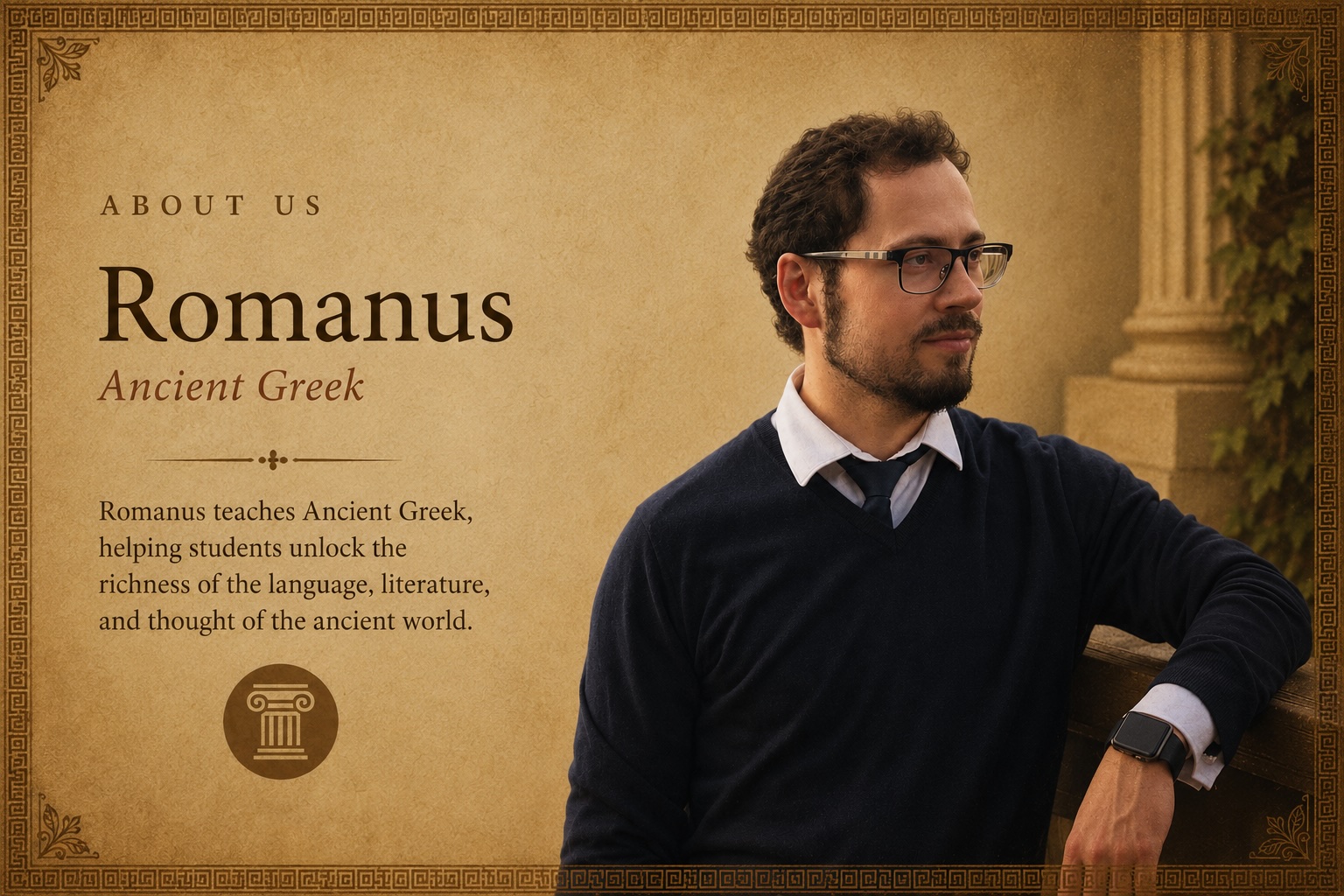
Romanus helps organize Ancient Greek as a path into thought, literature, and argument.
Romanus is a PhD researcher in Philosophy at the Complutense University of Madrid and an FPI fellow at IFS-CSIC. His work focuses on Spanish and Ibero-American philosophy, the history of ideas, and the relation between language, thought, and culture.
Course faculty
Polina teaches Latin in a way that makes an ancient language feel clear, structured, and alive from the very first lessons.
Her approach combines a strong grammatical foundation with a deep understanding of how people learn: she holds a BA in Philosophy and an MA in Evidence-Based Education Development from HSE University.
She is a regular tutor at the Antibarbari HSE club and has completed six programmes at Vivarium Novum, one of the world's leading centres for active Latin and Greek: Latin and Greek courses, a Seneca reading seminar, and the in-person Otia Tusculana programme. She has also studied with Oxford Latinitas in a women-only reading seminar.
In her classes, students move step by step through grammar, begin reading original texts, and gradually gain confidence in working with Latin.
Andreas combines natural and grammar-translation methods to help students approach Latin and Ancient Greek with confidence.
In 2026, Andreas completed his Master's degree with honours in Classical Philology at Lomonosov Moscow State University. In 2022–2023, he twice took part in online courses at the Vivarium Novum Academy in groups devoted to reading Latin authors, before completing a one-year in-person internship at the Academy in Italy.
During his internship, Andreas participated in teaching-methodology workshops led by the Academy's instructors, organized Ancient Greek classes for beginners, and presented a seminar in Latin on the life and works of Ausonius. These experiences helped him master the inductive method of teaching classical languages both in theory and in practice.
Andreas combines techniques from natural and grammar-translation methods in both private and group teaching, drawing on the strongest practices of each. Since summer 2024, he has been a regular Latin and Ancient Greek instructor for beginner and advanced groups in the Palaestra project, where students consistently report satisfaction with their progress and leave positive feedback on his teaching.
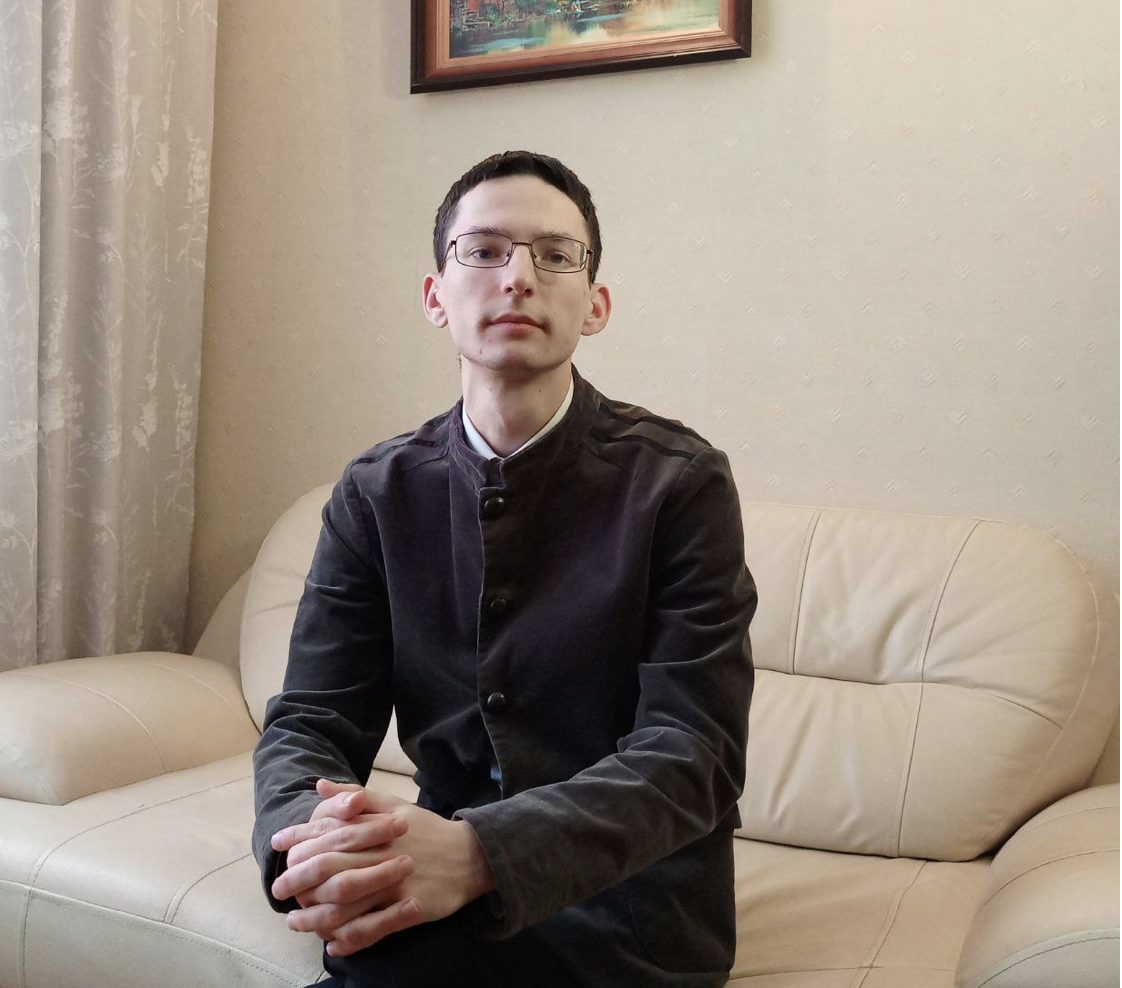
Daniil's multilingual expertise and substantial teaching experience help students make highly effective progress towards genuine command of both modern and ancient languages.
Daniil completed both his bachelor's and master's degrees at the Russian State University for the Humanities (RSUH) and is currently a postgraduate researcher in Classical Philology at RSUH's Institute for Oriental and Classical Studies. He successfully completed a one-year internship at the Accademia Vivarium Novum.
Alongside Latin and Ancient Greek, Daniil speaks English, Japanese, French, Spanish, Chinese, German, and Arabic, and also works in translation. In his private teaching, he has developed learning materials focused on the practical mastery of grammar.
Pricing
Enrollment is open for beginner and intermediate Greek, as well as beginner Latin. Choose a course and continue to checkout.
Questions
No. The courses are built for beginners, including people starting from the Greek alphabet or first Latin pronunciation and sentence work.
Recording details will be confirmed before launch. The live sessions are designed to be useful even if a recording is added later.
Two interactive videoconference meetings. Additional consultations and their format are discussed by participants and organizers as needed.
Reading is central. Grammar is taught as a support for understanding sentences and building confidence with real text.
No. All materials are prepared by us and will be provided in a clear, well-designed, and convenient format.
Alongside the intellectual pleasure of the learning process, we hope to give students a broader understanding of classical languages and new, effective tools for continuing collegial and/or independent study.
Ancient Greek and Latin share the same AKRO path: guided lessons, real texts, and a reader that respects each language.