Greek
Ancient Greek cohort
Alphabet, forms, syntax, and guided reading toward Apollodorus.
Akro guided cohort
A small guided online cohort for beginners who want to move from curiosity to real reading.
Work through the Greek foundations with Thrasymachus and Apollodorus, or join the new Latin path built around Gradatim. Both tracks are guided, reading-first, and students who choose Greek + Latin receive 20% off.
Greek and Latin
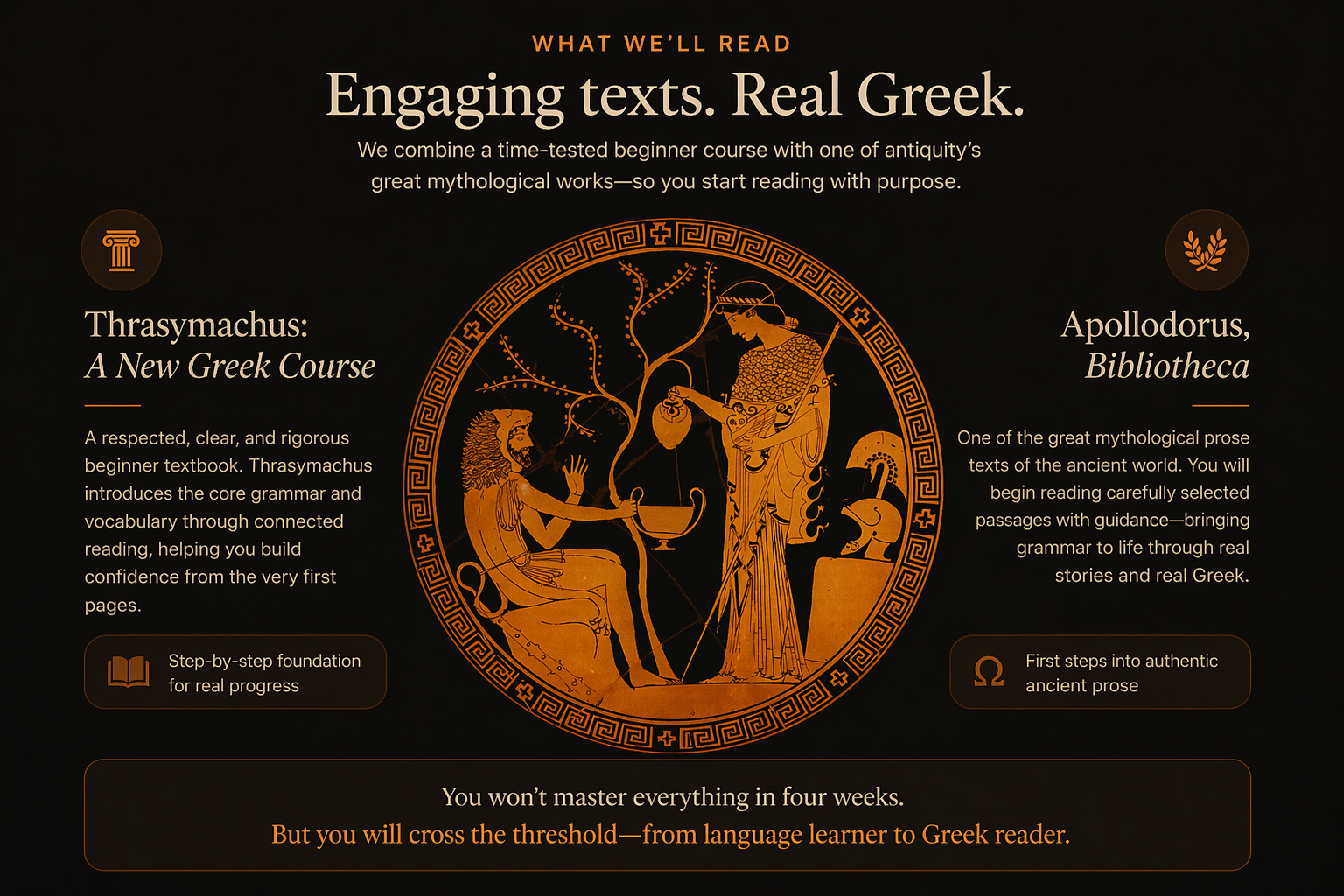
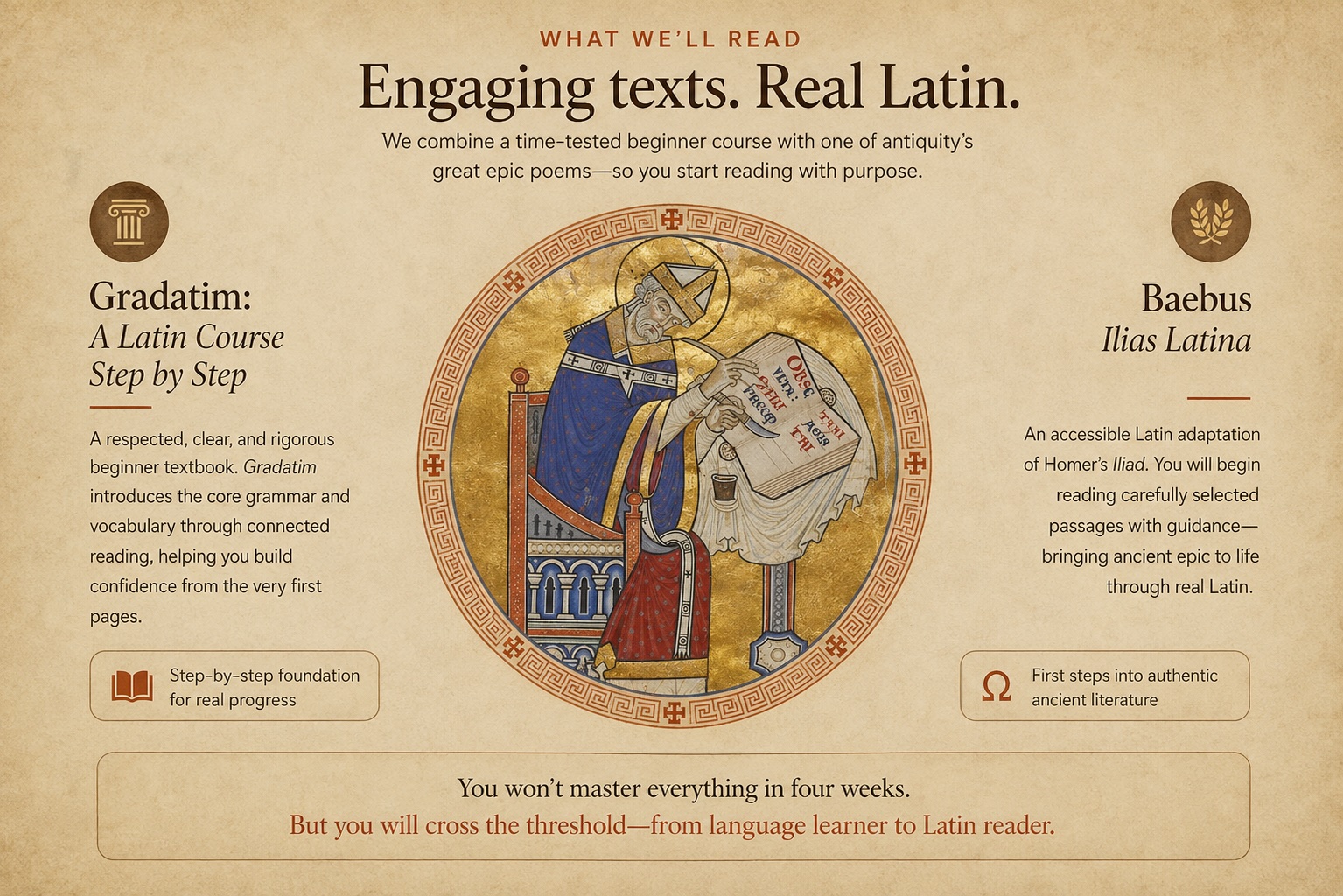
The Greek cohort keeps its reading-first route into Thrasymachus and Apollodorus. The Latin option uses Gradatim as the main textbook: a clean step-by-step path from forms and vocabulary into connected Latin sentences, with the same small-group guidance.
Alphabet, forms, syntax, and guided reading toward Apollodorus.
With Gradatim as the spine: vocabulary, forms, then connected Latin sentences.
Choose both languages at once and receive a 20% discount on the combined price.
Why this cohort
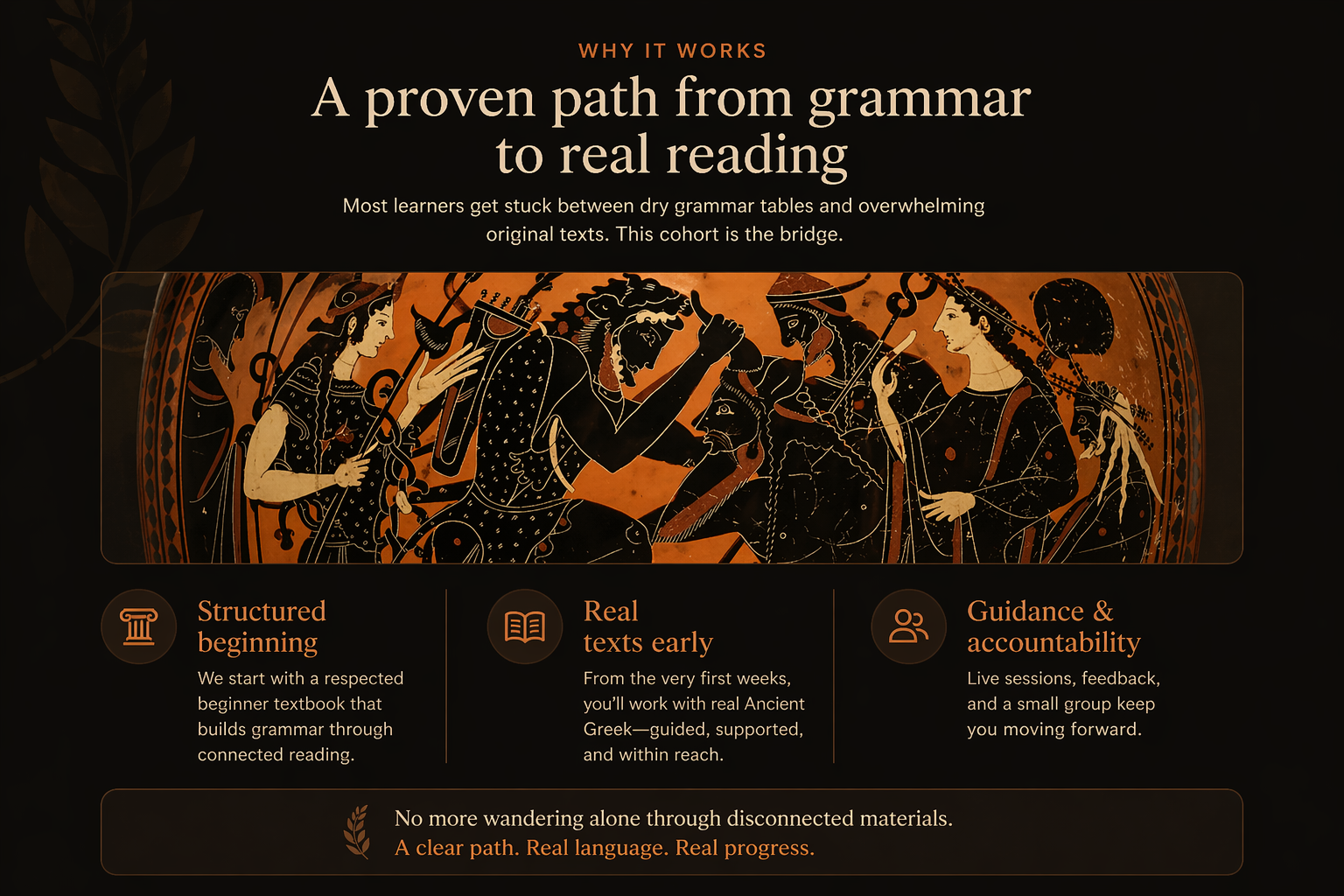
Most beginners get stuck between grammar tables and original texts that are still too steep. This cohort gives you a bridge: guided explanation, manageable textbook progression, and real reading practice.
Syllabus
Switch between the Greek and Latin reading paths. Each one combines a beginner course with a first guided step into real classical literature.
Structure
Fit
Probably not the best fit for advanced readers already comfortable with continuous Greek or Latin prose.
Akro support
The cohort is not isolated from the product. Learning continues between sessions: students can read, review, and track progress inside an environment built for classical texts.
About us
The cohorts are taught by researchers and classicists who work with ancient languages as living paths into texts, ideas, and intellectual history.
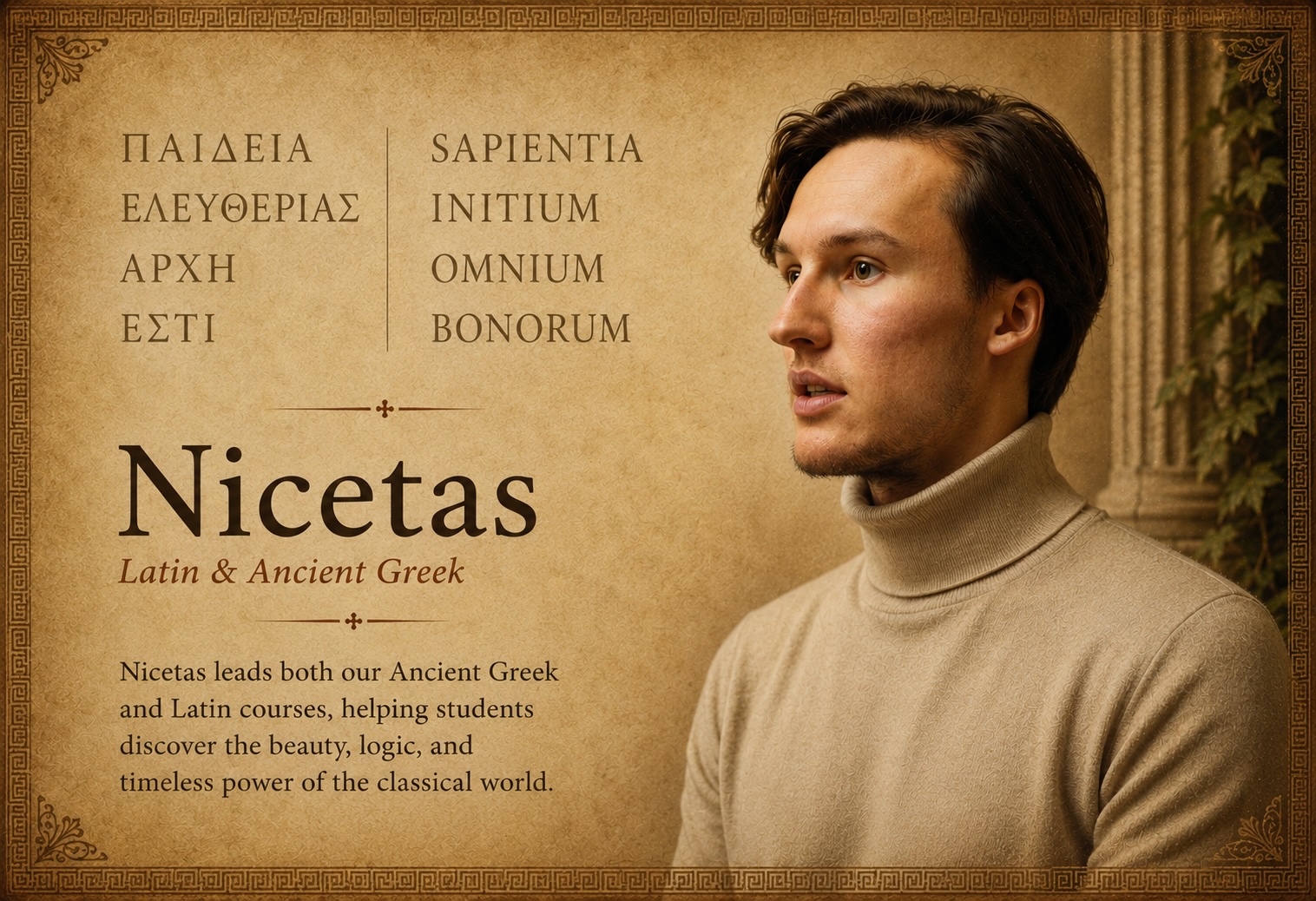
Passionate about languages and classical philology, Nicetas teaches Latin and supports the Ancient Greek path.
Nicetas studied Ancient History at Lomonosov Moscow State University, completed an internship at Accademia Vivarium Novum, and continued Classical studies at RSUH, where he led PHILOLALOI and taught Latin grammar and rhetoric. Since 2024 he has pursued Classics at the École Normale Supérieure in Paris.
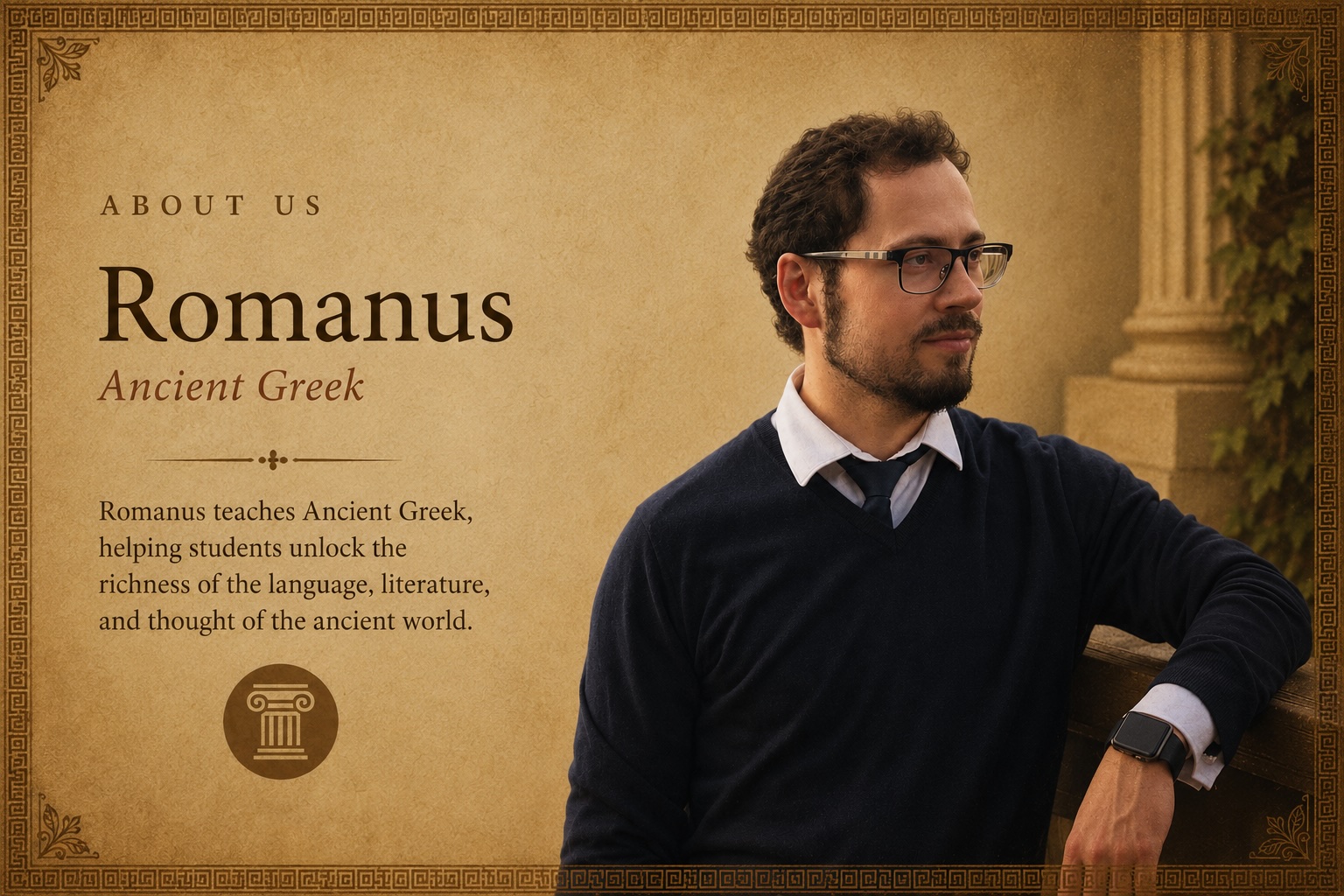
Romanus teaches Ancient Greek as a path into thought, literature, and argument.
Romanus is a PhD researcher in Philosophy at the Complutense University of Madrid and an FPI fellow at IFS-CSIC. His work focuses on Spanish and Ibero-American philosophy, the history of ideas, and the relation between language, thought, and culture.
Pricing
A focused first month for serious beginners who want structure, contact, and a path into real classical reading.
Choose Greek, Latin, or both. We will save your cohort details first, then send you to secure Stripe checkout. After payment, we will manually add your bonus Akro app subscription.
Questions
No. The cohorts are built for beginners, including people starting from the Greek alphabet or first Latin pronunciation and sentence work.
Recording details will be confirmed before launch. The live sessions are designed to be useful even if a recording is added later.
Plan for the two live sessions plus a few short study blocks between meetings. Consistency matters more than long isolated sessions.
Reading is central. Grammar is taught as a support for understanding sentences and building confidence with real text.
For Greek, the course structure assumes work with Thrasymachus. For Latin, we will use Gradatim as the main textbook.
Students will have a clearer method for continuing with Akro, future cohorts, and supported reading paths.
Join a small cohort, build a solid foundation, and begin working with real classical texts in four weeks.